
Your Child Is Watching How You Handle Failure


Picture this: you've just burned dinner. Not a little scorched - we're talking smoke alarm, open-all-the-windows, order-a-pizza kind of burned. You're exhausted. It's been a long day. And without even thinking, you mutter something under your breath, slam the oven door, and say, 'I can't do anything right.'
Your seven-year-old is sitting at the kitchen table, watching every second of it.
Here's the thing - that moment? It's a lesson. Whether you meant it to be or not.
The Classroom You Didn't Know You Were Running
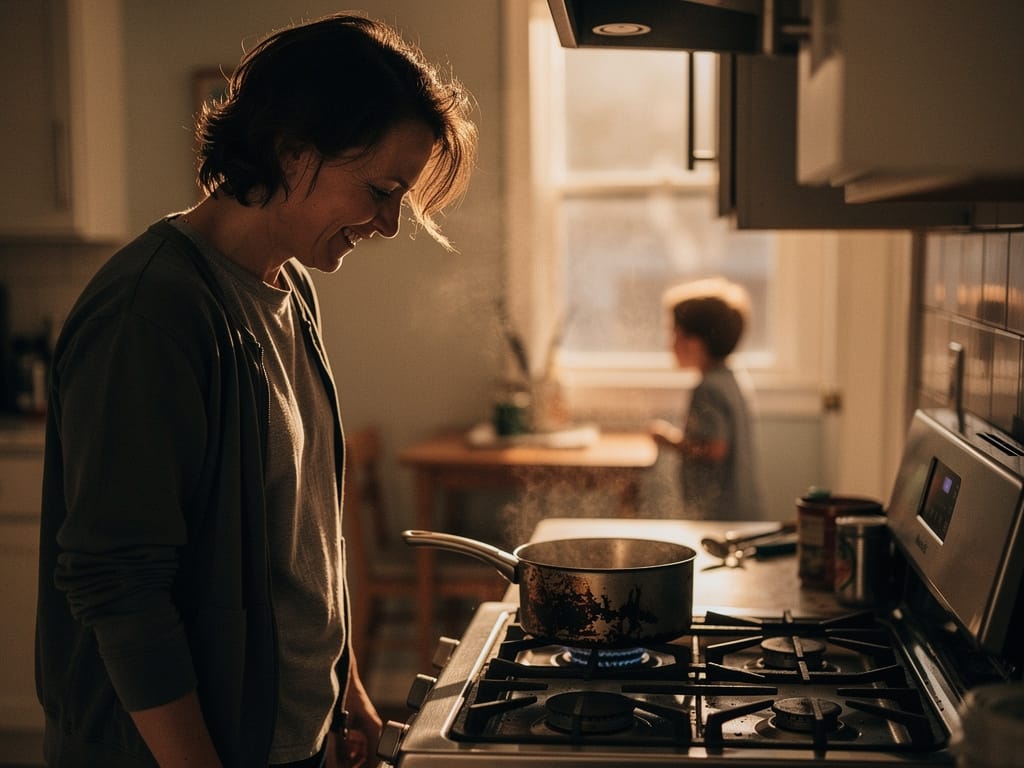
Kids are relentless observers. Long before they can articulate what resilience means, they're building a mental blueprint of it - pulled directly from watching you.
They're not just watching what you do when things go right. They're watching what you do when things fall apart.
When you miss a deadline. When you lose your temper and then apologize. When you try something new and it doesn't work. When you say, 'That was hard, but I'll figure it out.'
Every single one of those moments is data their developing brain is quietly filing away.
Why Your Reaction to Failure Matters More Than You Think
Research in child development consistently points to one uncomfortable truth: children mirror the emotional patterns of their primary caregivers - not the advice they're given, but the behaviors they witness.
You can tell your child a hundred times that it's okay to make mistakes. But if they watch you spiral into self-criticism every time you make one? The message they actually absorb is very different.
Let's be honest about something.
Most of us were never taught how to fail gracefully. We were raised in environments where mistakes were either punished or swept under the rug. So we're not just parenting our kids - we're often unlearning old scripts at the same time.
That's not a flaw. That's just the work.
What 'Modeling Resilience' Actually Looks Like
It doesn't mean performing positivity. It doesn't mean pretending failure doesn't sting.
It means letting your child see the whole process - the frustration, the pause, and the recovery.
- Name what you're feeling out loud. 'I'm really frustrated right now. I need a minute.' That's not weakness - that's emotional literacy in action.
- Show the pivot. After the frustration, let them see you problem-solve. 'Okay, that didn't work. What can I try differently?'
- Drop the self-attack. Replace 'I'm so stupid' with 'That didn't go the way I planned.' The language you use about yourself teaches them the language they'll use about themselves.
- Repair out loud. If you overreacted, say so. 'I got really upset earlier and I snapped. That wasn't fair. I'm sorry.' Watching you repair is just as powerful as watching you fail.
None of this has to be perfect. In fact, the messiness is part of the point.
The Gift Hidden Inside Your Bad Days
Here's something worth sitting with: your child doesn't need a parent who never struggles. They need a parent who shows them what to do when they do.
Think about a moment when you watched someone you admired handle something hard with grace. Not fake grace - real, imperfect, human grace. Didn't that stay with you?
That's what you're capable of giving your child. Not a highlight reel. A real example.
When you let them see you get knocked down and get back up - even slowly, even clumsily - you're telling them something no pep talk ever could: 'This is survivable. You can do this too.'
A Small Shift That Changes Everything
You don't have to overhaul your entire approach overnight. Start with one thing.
The next time something goes wrong - a spilled drink, a work setback, a plan that falls through - pause before you react. Just one breath. Then say something out loud that you'd actually want your child to say to themselves someday.
That's it. That's the whole practice.
Over time, those small moments stack up into something remarkable. Your child starts to internalize that failure isn't a verdict on who they are. It's just part of the process - for everyone, including you.
The goal isn't to be a perfect parent. It's to be a real one - someone your child can actually learn from, not just look up to.
You're already doing more than you know. Keep going.

Subscribe & Stay with Us